
Updated January 2026
For UK punters, live markets move fast. Odds reprice after shots, cards, injuries, plus tactical shifts. Firms suspend during danger, then reopen at new prices. Broadcast delay adds timing risk, so act only after confirmation. Discipline matters more than speed. This guide shares in-play football strategies with trigger-led rules. Each method defines entry, management, and exit. Expect structure, not miracles, aimed at fewer mistakes. Use exchange prices to judge value, track liquidity, and avoid chasing. Plan stakes before kick-off, then follow rules without emotion always. Finish with a checklist and FAQs to keep decisions consistent under pressure after late goals.
In play Betting Sites












































Apply one best in play betting strategy per scenario: late unders after sharp tempo drop; lay short-priced favourites fading; second-half corners when pressure spikes; oppose momentum swings following reds; cash-out hedges during volatile extra time. Calibrate edges, record results, iterate plans. Practice patience, manage emotion, trust numbers, protect capital through measured exposure. Review logs weekly. Iterate. Before anything else, I favour responsible sports betting UK as the default mindset for live work.
In play betting strategy basics

In-play betting happens after kick-off, with prices shifting on time, incidents, and order flow. A goal, red card, or VAR check resets expectations in seconds. Books suspend during danger, then reopen at sharper numbers. Broadcast delay creates timing risk, so treat late pictures as noise. Build an in play betting strategy around signals, not opinions. Define what starts a trade, what keeps it open, and what ends it. Avoid chasing after a swing, because the market has already priced the emotion. If you’re tracking venue feel, typing find a bookies near me during cup days can reveal street sentiment versus matched queues.
Most of the time I’m in a market I’m looking for an opportunity with as little downside as possible.
Peter Webb, Managing Director at Bet Angel Limited, long-time exchange trader
Alongside those voices, seasoned traders test ideas against esports betting predictions during quiet midweeks.
We want early prices for recreational customers, not picked off by the few.
Terry Pattinson, ex Group Trading Director at William Hill, sportsbook trading leader
Using match data for play reading
Live stats help when they explain threat, not noise. Use one screen for numbers, one for prices, then merge both into one view. Anchor the read on shot quality, then confirm with territory and set pieces. Ignore safe possession, plus long-range spam. For how to bet in play football without watching, rely on a tracker and an exchange ladder, then follow the same filters each match.
- Big chances, shows clear scoring openings, not hopeful efforts.
- Penalty area entries, signals attacks reaching the danger zone.
- Shots inside box, tracks close-range volume with intent.
- Keeper saves, confirms attempts forced a response under pressure.
- Set-piece count, flags repeat dead-ball stress and chaos.
- High turnovers, highlights wins near goal with short paths.
- Attacks per minute, checks whether pressure stays sustained.
Top in play cues for goals
Use in play football tips as a checklist, not a hunch. Look for repeat danger, then confirm with a second signal before entry. Avoid one-off sparks after a counter. Wait for pricing to settle after a suspension, then act.
- Back-to-back box entries, why it matters: defenders lose shape under repeat waves.
- Two keeper interventions, why it matters: shots reached target with force.
- Three corners in ten minutes, why it matters: pressure turns into free headers.
- Turnovers near D, why it matters: fewer passes needed to shoot.
- Wide overloads, why it matters: cut-backs create central finishes.
- Centre-back booking, why it matters: duels soften and fouls rise.
- Subbed striker on, why it matters: role shift lifts box presence.
- VAR check builds, why it matters: tension moves lines before restart.
Time decay and football price moves
Time decay means prices shorten as minutes pass without a goal, because fewer minutes remain for a change. Match odds drift is slow, totals lines shift faster near key thresholds. Event shocks differ, a big chance, a card, or a penalty call rewrites prices at once. After a suspension, in play football odds often reopen wide, then snap back as liquidity returns. Avoid entry in the first seconds after reopening, then follow the tape.
Best in play minutes for entry
No fixed minute works across every match. Use phases with stable liquidity and clear patterns. Entries often improve after ten minutes of sustained pressure, when prices lag behind territory. Another window appears after a tactical switch, once roles settle and the line stops jumping. Substitution phases also help, once the book reopens and the spread tightens. Best inplay football bets come from patience after the reopen, not speed on the whistle.
Best in play football markets
Choose one arena, then build rules around speed and exits. Match odds suit trend-following after clear dominance. Goal lines suit pressure reads plus timing. Correct score suits small, planned exposure with rapid hedges. Liquidity decides execution, thin pools widen spreads and punish late clicks. Focus on one or two markets, learn pricing habits, then scale stake size. Sportsbooks lock profits through cash-out, exchanges let you trade out through back, lay orders.
| Market | What drives price | Best match conditions | Main risk | Recommended approach |
|---|---|---|---|---|
| Match odds | Goals, cards | Clear edge | Reopen gaps | Trade trend |
| Draw | Clock, chances | Even game | Late goal | Small lays |
| Over 2.5 | Pressure waves | Open shapes | Chance noise | Wait confirm |
| Under 2.5 | Tempo drop | Low shots | Set pieces | Drift take |
| Next goal | Momentum shift | Sustained siege | Counter punch | Fast exit |
| BTTS | Both threats | High lines | Game kill | Price watch |
| Correct score | Single events | One-way flow | Volatility | Cover plan |
| HT/FT | Phase control | Strong starts | Rotation | Avoid thin |
Goals markets using match pressure
Pressure only matters when it creates repeatable shots from prime zones. Track box entries, cut-backs, forced saves, plus corner runs. When those signals stack, in play football bets gain edge on overs, since price lags reality for seconds. Late-goal timing needs patience. Wait until pressure stays high for ten minutes, then take a small position, with a hard exit if tempo drops. Avoid double-counting crowd hype after one scramble. Ignore harmless possession, plus long-range attempts with no rebound danger.
Correct score markets using momentum
Correct score prices swing on one kick, so treat entries as trades, not forecasts. Use momentum to find scorelines likely to survive the next phase. Favour shapes where one side creates the same chance type again, such as overloads plus cut-backs. Skip spots where threats arrive from random punts. Plan a hedge before entry, based on which single goal hurts most. Use implied probability to sanity-check prices, then size small. Inplay football trading works best with strict exits after reopen moves.
Correct score cover for football success
Cover means paying to protect against a one-goal swing. Structure stakes so one strike changes profit, not bankroll. Use cover only when price offers value after a stable phase. Avoid cover when it eats edge through wide spreads. In-play trading needs repeatable cover rules, linked to match state, not fear.
Lay 0-1, protect against second away goal.
Back 0-0, protect against first goal.
Lay 1-0, protect against equaliser.
Back 1-1, protect against late winner.
Lay 2-1, protect against next goal.
Back 2-0, protect against comeback strike.
Strategy 1 — Laying the Draw (LTD)

Lay stalemate price when both sides press, create danger, chase winner. Time decay favours layer while score stays level. Target fixtures with pace, width, shots from prime zones, alongside frequent set pieces. Prefer front foot favourites, plus underdogs tiring after long spells. Avoid slow matches, rivals content with point, dead rubbers, late season safety patterns. Watch referee style, frequent stoppages break rhythm and freeze pricing. Use betting tactics football with clear entry, management, exit rules. Next sections set those steps in detail. Focus on leagues with late goals, strong benches, plus managers who chase wins after breaks often too today.
Using time decay for entry
Use football bet in play after clear read, stable rhythm, active attacking. Enter at 0-0 or 1-1 when pressure stays sustained. Require two signals within ten minutes, box entries with forced save. Skip entry after big miss, since price often snaps back. Check spread width, thin queues signal danger. Place limit order near target, wait fill, then manage risk from fixed unit. Cancel orders before suspension, reopen gaps punish stale clicks.
- Level scoreline, both teams push forward
- High tempo, quick restarts, few stoppages
- Pressure sequence, box entries, keeper action
- Fair price above target, no chase clicks
- Limit order placed, patience through delay
- Stake sized from unit, loss cap set first
- Event confirmed via live feed, not pictures
Log fill price, minute mark, then audit outcome after match ends weekly. Monitor queue depth, watch spread, then place order only during calm phase. Use one alert for suspension, protect open liability always.
Draw exit rules using match flow
Use football betting strategy guide exits built on flow changes, not clock. After score change, hedge fast, because price moves hard. When tempo drops, close position, even with minutes left. Treat red card, VAR check, or shape shift as reset, then reassess. Respect control flips, one side stops pressing and protects space. Set stop loss at one unit, accept hit without debate. Take profit by trading out after momentum swing, before price stalls. Use partial hedge to lock gain, leave small runner for extra value.
- Home strike hits, hedge or bank profit
- Away finish lands, cut exposure, reassess
- Attacks stop, exit during flat rhythm
- Pressure flips side, close amid control shift
- Red card shown, act before reopen gaps
- VAR review starts, wait restart, then decide
Sportsbook cash-out often lags exchange moves. Use fastest venue for exit. If spreads widen, reduce exposure promptly, wait calmer phase, then return. Protect gains first.
Best level score minutes for draw
Use in play football strategy timing as context, linked to urgency plus price drift. Windows often open after 55 minutes at 0-0, when favourite commits bodies, underdog tires, counters rise. Another phase appears around 70 to 80 at 1-1, when legs fade, duels lost, fouls mount. Look for siege spells where defending side clears long, then fails to hold ball. Avoid late periods where both sides protect point, slow pace, run clock. Skip injury time chaos, since one clearance flips exposure without warning. Prioritise fatigue, structure, plus risk appetite always. Track substitutions, tired full-backs, midfield gaps, since pressure grows there.
Strategy 2 — Laying the Correct Score
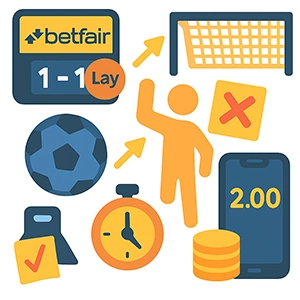
Laying a scoreline beats guessing one. The price often shortens on minutes, not dominance. One finish breaks the quote and hands value to the layer. Pick matches with pace, direct runs, plus box contact. Look for level spells where attacks keep arriving. Avoid slow contests, teams protecting parity, or dead rubbers. Plan the exit before entry. Markets suspend on danger, then reopen with gaps. Work with limit orders, accept delay, cap liability, then move on. In-play football betting rewards calm timing, not bravado.
Correct score laying using pressure data
Start with repeat threat, not hope. Target common lines where one goal flips the book. Require two forced saves, plus three box entries inside ten minutes. Favour clear tactical edge, such as overloads on one flank, or a striker isolating a slow centre-back. Skip entry after a huge scare, VAR pause, or penalty appeal, since quotes swing. Set liability at one percent of bankroll, then stop. Place a limit lay at the edge of the spread, wait the fill, then manage.
| Scoreline | Minimum signals | Odds band | Avoid trigger | Stake approach |
|---|---|---|---|---|
| 0-0 | 2 saves, 3 box entries | 2.8 to 4.2 | VAR pause | 0.8% cap |
| 1-0 | Fav siege, cut-back chance | 3.3 to 6.1 | tempo drop | 0.7% cap |
| 0-1 | home wave, clear finish | 3.4 to 6.4 | red card | 0.7% cap |
| 1-1 | end-to-end, 2 saves | 4.1 to 8.3 | both sit | 0.6% cap |
| 2-0 | away push, box entries | 6.2 to 14.5 | injury stop | 0.5% cap |
| 0-2 | home push, box entries | 6.3 to 14.8 | keeper down | 0.5% cap |
In-play football betting strategies work best when one rule stays fixed, never chase, never add, never widen risk.
Dangerous set pieces for goals
Correct score lays die on dead balls. One delivery, one touch, and the book snaps shut. Treat danger as quality, match-up, plus chaos after contact. In-play football betting tips: tighten exits when crossing zones stack, then reduce exposure until open play returns.
Set-piece danger cues
Apply these cues before each restart. When three appear, cut liability or exit ahead of the kick.
Corner side switch changes angle, zonal line breaks.
Inswinger drops on six-yard line, keeper stays rooted.
Aerial mismatch wins first contact, loose ball falls central.
Wide fouls repeat, same delivery lane stays open.
Block screens free a runner, marker loses line.
Short routine drags a full-back, cut-back lane opens.
Long throw hits penalty spot, scramble follows.
Strategy 3 — Backing Late /goals in the Second Half Using Time-on-Price Decay

This late-goal method works like an overs trade built on urgency and price. Minutes pass, odds rise, managers throw men forward. Target open matches where legs fade, spaces widen, plus box entries keep landing. Look for one side chasing, full-backs caught high, and counters flowing both ways. Skip quiet games with slow build, few touches in danger, or teams protecting a point. Set entry, stop, and exit before you click. Live inplay football rewards discipline, since one lull can drain value fast.
Second half time decay triggers
Use two live signals, not the clock. Wait after goals, cards, or VAR until pricing settles. Then check the match again and act only with clear threat. In play football betting odds move fast, so use limit orders and accept delay.
- Is tempo rising over the last five minutes?
- Is the trailing side pressing with numbers?
- Are counters breaking with runners in support?
- Have two box entries arrived in six minutes?
- Has the keeper faced a save since minute 60?
- Are corners arriving from forced defending?
- Is the leading side losing midfield duels?
- Has the spread tightened on the exchange?
Using substitutions for goal signals
Subs change threat through legs, roles, and match-up edges. Treat each change as a clue, then wait two minutes to confirm shape and intent. If pressure patterns shift, enter. If rhythm stays flat, pass. Use in-play football betting tips to avoid reacting to names alone, focus on roles and zones.
- Attacking subs, fresh striker or winger, example: target man on for a full-back, switch to two up front.
- Stabilising subs, extra midfielder or centre-back, example: hold player on to slow counters and protect lead.
- Disruption subs, unusual role swap, example: winger moved inside, full-back pushed high to overload wide.
Track first actions after change, runs in behind, plus box presence. If those lift, back goals with a fixed stake, then exit on price move or tempo drop.
Back Lay Calculator
Results:
How to use
Enter your bookmaker back stake and odds. Add the exchange lay odds and your commission rate. Click Calculate. Use the lay stake shown to hedge the same selection on the exchange.
- Use decimal odds, not fractions.
- Check the exchange market matches the bookmaker market.
- Confirm your lay bet is fully matched.
- Recalculate if odds move before placing both sides.
- Record results in your tracker.
Strategy 4 — Laying the Leader

Lay the front side when match flow points to a swing, not because comebacks look fun. The best spot appears when the leader retreats, clears long, then fails to keep the ball. Look for a tactical mismatch, such as a full-back pinned, or midfield outnumbered. Pressure must feel repeatable, not a single break. Avoid laying elite teams in control, with clean possession and low stress. Skip low tempo fixtures where chances arrive from distance. A live betting football strategy needs clear entry, stop, and exit, set before any click.
Using pressure data for play swings
Use football live betting strategy through swing reads, not raw possession. Look for territory shifts plus pressing rise, then confirm with repeat danger. Wait for a sustained spell where the leader cannot relieve pressure. Enter after the next calm restart, not straight after one chance. Track clearances, second balls, and whether the leader keeps losing the next pass.
- Territory flip, attacks move from middle third into box zones with control.
- Pressing uptick, defenders rushed, passes forced wide, errors rise.
- Repeated entries, cut-backs, low crosses, and shots follow each wave.
- Clearance pattern, long punts replace build-up, ball returns fast.
- Ball retention drop, first touch fails, midfield outlets vanish.
Ignore sterile spells where one side circulates far from goal. Focus on sequences that end with shots, corners, or forced blocks. Those events move prices for a reason.
Score reaction inside football markets
Scores change pricing in uneven ways. A 1-0 lead often shortens fast, yet pressure can still drag it back. A 2-0 lead shortens harder, but the market also expects game control. Context matters. If a favourite trails, prices swing quicker on pressure. If an underdog leads, one spell can trigger sharp drift. Use in play football betting with exits tied to the next five minutes, since suspensions and feed delay punish slow action.
| Score state | Typical market reaction | Watch next 5 minutes | Exit action |
|---|---|---|---|
| 1-0 leader deep | price holds, then drifts | entries, corners, saves | exit if lull |
| 1-0 leader on front | price firms | press resistance | no lay |
| 0-1 favourite trails | drift then snap | chance quality | hedge on shift |
| 2-0 underdog leads | sharp shorten | fatigue signs | small lay only |
| 2-1 tight lead | volatile | counter threat | take profit fast |
| 1-1 after equaliser | reset | momentum side | bank or re-read |
| Red card with lead | reprice gap | shape change | reduce exposure |
Strategy 5 — Utilising Dangerous Set-Piece Pressure

This is a niche angle built on repeat dead-ball threat, not open-play swings. Target sides with sharp delivery, strong headers, and rehearsed blocks. Look for spells where corners stack and the defence looks stretched. Use inplay football betting tips when a team wins second balls and keeps play pinned in. Avoid false signals. Harmless corners, poor service, and easy clearances waste stake. Watch counter risk. If the attacking side leaves two at the back and loses the next duel, danger flips fast. Trade only when pressure feels repeatable.
Dangerous corners using time windows
Use short windows to judge whether threat is rising. Treat one corner as noise. Act only when corners arrive in clusters and delivery looks sharp. Check the exchange queue before entry, thin depth widens spreads and punishes fills. When counters start landing, stand down at once. In play football tips work best when rules are strict and exits are fast.
- Window rule, three corners inside eight minutes, signals sustained siege.
- Delivery check, inswing hits six-yard zone, keeper stays deep.
- Aerial edge, same target wins first contact twice.
- Second-ball control, loose clearances fall to attackers each time.
- Price check, spread stays tight, order book holds size.
- Stand-down trigger, two clean counters break with runners in support.
Track sequences, not totals. When the cluster ends, pause. Wait for the next burst before any new entry.
Using goals markets after pressure
Corner dominance can lift goal odds value, but timing matters. Enter only when the line has not fully adjusted, such as after a quick cluster with stable price. If odds already crashed, pass. Use in play football betting odds with a fixed plan. Take profit once price moves your way, even without a goal, then reduce exposure. Cut the trade when pressure stops, corners dry up, or the defending side starts keeping the ball. Avoid chasing after a near miss. Wait for the next window.
Strategy 6 using data for goals
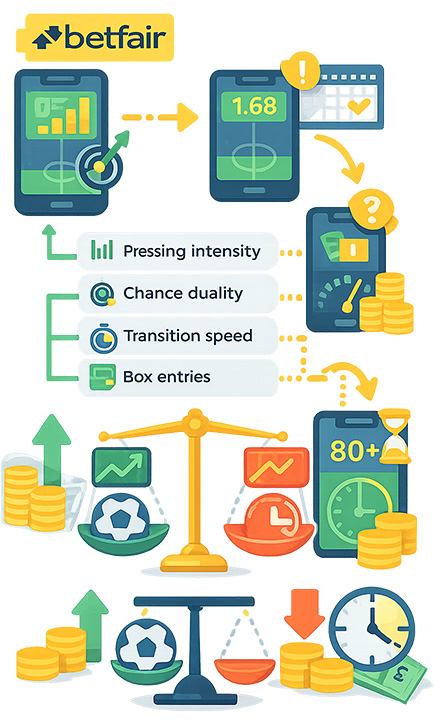
This model-lite method gives structure without spreadsheets. Use a small set of live signals to judge whether goal prices feel cheap or inflated. Football betting in-play works when numbers support what the match shows, not when you hunt confirmation. Data helps you stay honest, yet context still rules. A card, a knock, or a tactical swap changes meaning fast. Set triggers before kick-off, then follow them. Pre-set entry rules reduce bias after a near miss. Track one screen for indicators, one for prices, then act only when both align cleanly.
Using match momentum to pick goals
Rate momentum with four inputs, pressing, chance quality, transition speed, plus box entries. Strong pressure with clean looks matters more than shot count. Fast breaks matter when runners arrive. Repeated entries matter when defenders start clearing blind. When the rating rises and the market barely shifts, value often sits in front of you. When the rating fades and prices still move, step away. Best in play betting strategy means passing more than playing.
| Momentum read | Price behaviour | Decision | Reason |
|---|---|---|---|
| Rising | Stagnant | Back goal | Lag vs threat |
| Rising | Falling fast | Stand aside | Edge spent |
| Fading | Falling anyway | Avoid | Clock illusion |
Example flow, minute 62, away side pins host, wins second balls, forces two saves, yet the line barely moves. Take a small position, then exit on drift if pressure ends.
Time based exit for football markets
Pre-set exits stop you clinging to a trade. Use a time window tied to threat, not hope. If the match cools and no new danger arrives, reduce exposure or leave. This is not panic. It is planned control. Late phases bring faster swings, so tighten windows and act quicker.
- Threat vanished for eight minutes, exit, flow has changed.
- No box entry since last check, reduce stake, edge has weakened.
- Price moved enough for target profit, bank, avoid reversal.
- Spread widens after suspension, cut exposure, fills get costly.
- Two counters against your side, close, game state has flipped.
- Minute 80 plus, shorten exit window, volatility rises fast.
Keep a written stop loss for the day, then stop when hit. Football betting strategy tips work only when you follow them under stress.
Strategy seven laying markets on goals
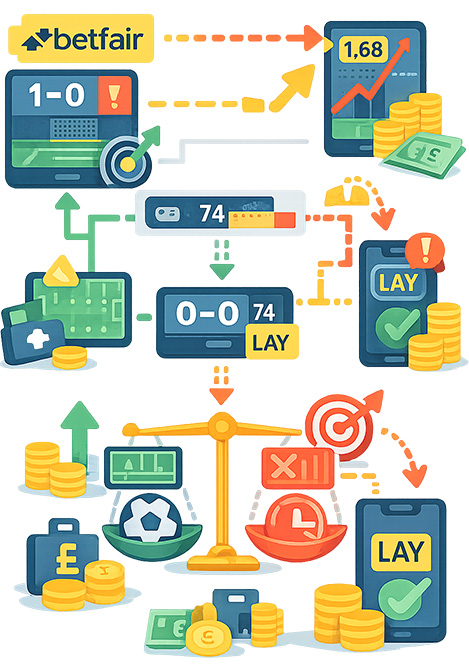
Laying goal lines is the opposite of chasing action. You oppose inflated goal expectation when the match shows little threat. Look for slow tempo, compact blocks, and attacks ending in wide crosses with no runner. Prices often drift on talk and momentum stories, not chance quality. Mean reversion in live odds favours the layer when pressure looks thin. One red card, or a bold shape switch, can wreck the read in seconds. Set capped liability, place exit points, then follow them. Treat every entry as a trade, not a view.
Laying goals lines using match data
Confirm low threat before entry. Use live indicators, then compare them with the current line price. If implied probability looks too high for what you see, lay the goals line with capped liability. The best entries often come after one frantic spell that fades, where prices overreact. Avoid laying when counters carry real pace and runners.
| Indicator | What it suggests | When it’s misleading | Action |
|---|---|---|---|
| No shots on target | lack of clear looks | single big chance missed | wait confirm |
| Few box entries | poor access to danger | late surge starting | delay entry |
| Crosses cleared easy | no aerial edge | new striker on | reduce size |
| Low corner rate | limited dead-ball threat | tactical press rising | recheck flow |
| Slow restarts | tempo under control | trailing side speeding up | stand down |
| Long shots only | low chance quality | keeper shaky | tight stop |
| Few transitions | no open spaces | fatigue phase | short window |
| Price jump on hype | market overreaction | pressure stays sustained | enter small |
Size stake from liability, not from hope. Keep exposure flat across matches. Exit on any game state shock.
Using score state to manage risk
Score state changes intent fast. A trailing favourite raises tempo, adds runners, and lifts goal risk. A leading underdog often sits deep, invites crosses, yet limits central shots. Manage football betting in-play by cutting exposure after a sharp momentum shift. Exit at once on red card, injury to key defender, or VAR penalty award. Reduce size near added time, since chaos rises and spreads widen. If the match turns into end-to-end attacks, close the lay and reassess. Protect bankroll first, then look for the next spot.
Execution checklist for betting success
Process decides results. You win more from clean execution than from clever theory. Start by defining entry triggers you can verify in seconds. Check market depth before you commit, since poor liquidity widens spreads and ruins exits. Plan the exit first, then place the bet. Record what you did while details stay fresh. Mobile punters need fewer taps and fewer markets open. Exchange users need orders, patience, and respect for delay. Follow a repeat routine and you cut costly mistakes. Use how to place successful in-play football bets as a process focus, not a chase for ideas.
- Pick one market, close all others, reduce noise and misclick risk.
- Confirm feed delay, wait for the next stoppage before entry.
- Check in-play market liquidity, avoid thin queues and wide spreads.
- Write the trigger in one line, include minute, score, plus cues.
- Set stake from a fixed unit, never from mood or recent loss.
- Define exit price and time window, decide before order placed.
- Use limit orders on exchanges, avoid chasing moving quotes.
- Cancel unmatched orders during danger, suspensions reopen with gaps.
- Log entry time, odds, reason, and planned exit in notes app.
- Review after match, keep one change only for the next session.
Using entry rules for football strategy
Write rules you can measure. Replace gut feel with conditions, score state, minute range, plus two match cues. Add one data threshold, such as box entries or saves, then add a price rule, such as above your target. Demand a written reason tied to a rule before you stake. If you cannot write it, skip it. Size stake by risk and edge, not excitement. Best betting strategy for football starts with repeat rules you follow under pressure.
Top football errors that cost
Use these items as a quick audit after each session. Spot one repeated error, then build one rule to block it next time.
- Chasing after a missed chance, fix: wait two minutes and recheck threat.
- Ignoring latency, fix: enter only after a stoppage or settled phase.
- Doubling stakes to recover, fix: use fixed unit and stop-loss cap.
- Betting without an exit, fix: set exit price and time before entry.
- Following commentary swings, fix: trust cues and prices, mute audio.
- Trading through VAR, fix: close or cut exposure before review ends.
- Forgetting red card impact, fix: reassess shape, then decide anew.
- Chasing wide spreads, fix: use limits and skip thin markets.
- Changing plan mid-trade, fix: follow the pre-set window and target.
Data log for match review
A simple log beats switching systems each week. It shows where you win, where you bleed, and which cues mislead you. Keep it light so you keep doing it. Record match state, entry reason, odds, minute, cues present, exit, plus outcome. Review patterns monthly, not daily. Look for repeated mistakes and repeated edges. Proven football betting system work comes from small improvements applied across many bets.
| Field to record | Why it matters | Example A | Example B |
|---|---|---|---|
| Match state | sets context | 0-0, 62 | 1-1, 74 |
| Entry reason | tests rules | 2 saves, box waves | corner cluster |
| Odds and stake | checks value | 2.10, 1u | 1.86, 0.7u |
| Cues present | avoids hindsight | press rise, entries | deep defend, clears |
| Exit and time | measures discipline | 2.32, 70 | 1.70, 78 |
| Outcome note | drives change | profit, calm exit | loss, chased spread |
Execution Checklist & Common Mistakes
Every structured process requires an operational framework that reduces errors and enforces discipline. A betting strategy football framework uses defined checkpoints before, during, and after trading activity. Traders must prepare match notes, verify market liquidity, and plan stake allocation ahead of kick-off. Once live, monitoring involves shots, territory, pressing intensity, and timing of substitutions. Exit rules form the backbone: cash-out or hedge once signals fade, avoid chasing after losses, and never exceed capital limits. The guide to sports betting also stresses mechanical consistency, not intuition. Many lose money through impulsive entries, stale prices, or building correlated bets inside live bet builders. Mismanagement of bankroll or violation of stop-loss leads to rapid depletion. Maintaining records ensures transparency and future learning. Document timestamp, price, action, and outcome across January 2026 for every decision.
| Action step | Purpose | Notes |
|---|---|---|
| Pre-match research | Baseline expectation | Check xG trends, line-ups |
| Liquidity check | Execution viability | Avoid thin markets |
| Stake sizing | Bankroll control | Respect stop-loss limits |
| Entry trigger | Defined condition | Wait for genuine edge |
| Exit planning | Capital protection | Set cash-out points |
| Hedge readiness | Flexibility | Prepare lay or reduce |
| Logging trades | Performance review | Record market, stake, time |
| Weekly review | Adjust strategy | Refine rules from outcomes |
Common mistakes include overexposure on one outcome, ignoring signs of declining pace, or staking above pre-defined thresholds. Using structured rules around hedging, laying, and partial cash-out optimisation maintains focus. Stick to risk plans, and refine gradually.
Trade plan template, best markets to use, and pro tip reminders for consistent success
Consistency arises when rules replace impulse. A betting strategy football trade plan begins with an entry trigger: an attacking surge, tempo spike, or substitution increasing threat. Stake size must remain proportionate, often a fixed small fraction of bankroll. Exits should be pre-defined: hedge when the market drifts favourably, reduce if tempo collapses, and cut losses if a counter-attack alters control. The most reliable in-play arenas are match odds, over/under goal lines, and corners, since liquidity ensures clean fills. Monitoring live over/under line movement combined with expected threat chains and pressing intensity provides sharper timing. Protect equity with logs, set reviews, and steady iteration across January 2026. I finish every plan with responsible sports betting tips UK—limit exposure, pace entries, and schedule breaks for sharper decisions.
- Always confirm liquidity before entering positions.
- Green-up early when drift matches expectations.
- Track live expected threat (xT) to time entries better.
- Respect pressing intensity data to gauge fatigue shifts.
- Review logs weekly to identify recurring mistakes and refine triggers.
More information related:
- www.gamblingcommission.gov.uk Gambling Commission — In-play or in-running betting guidance
- en.wikipedia.org Wikipedia — Betting exchange overview
- en.wikipedia.org Wikipedia — Expected goals (xG) primer
- theanalyst.com Opta Analyst — What Is Expected Goals (xG)?
- https://www.reddit.com/r/SoccerBetting/ Reddit — r/SoccerBetting community hub
FAQs on in play football strategy
Where can i engage in in-play football betting?
Use licensed UK sportsbook apps, plus exchanges with in-running markets.
Is it betting strategies that work for live football games?
Yes, when rules drive entries and exits.