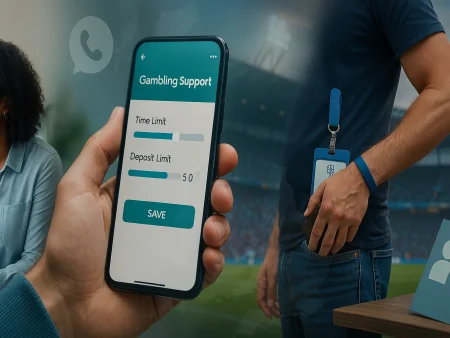

Please gamble responsibly. If you or someone you know has a gambling problem, please visit gambleaware.com, gamcare.org.uk or gamstop.co.uk to find help.





Updated September 2026
Live markets reward process, not impulse. Clicks matter. This guide turns live wagering into a routine for UK users. In-play betting starts after kick-off, tip-off, first serve, or map start, with odds reacting to each event. Prices shift fast after shots, break points, timeouts, or ultimates. Streaming delay, data lag, plus suspension increase risk, since your screen trails the feed. Plan before action. Confirm score, clock, line-ups, injuries, weather, and referee style. Set one strict unit size, keep bankroll steady, log results, and define clear exit points. Use cash out only when it cuts exposure, not to chase losses. Apply the same discipline across football, tennis, basketball, esports. Treat integrity alerts, team news, and void rules as selection factors.
Apply one best in play betting strategy per scenario: late unders after sharp tempo drop; lay short-priced favourites fading; second-half corners when pressure spikes; oppose momentum swings following reds; cash-out hedges during volatile extra time. Calibrate edges, record results, iterate plans. Practice patience, manage emotion, trust numbers, protect capital through measured exposure. Review logs weekly. Iterate. Before anything else, I favour responsible sports betting UK as the default mindset for live work.
Bet only if match state and odds agree, then stop on reversal.
Tom Butterworth, VP Sportsbook at DraftKings, founded William Hill US InPlay Trading
In Play Betting Basics
On UK apps, in-play betting sits beside live scores, timers, plus moving odds. A market line shifts after attacks, fouls, serves, runs, or rounds. Pauses appear when risk rises, odds freeze, then reopen at fresh prices. Pre-match work uses previews plus team news. In-running choices rely on fast reads, with gaps from stream delay or slow updates. You will see suspension, confirmation delay, plus a cash out button. Treat each as a signal, not a shortcut. Set one rule for every session, confirm current phase of play, then place stake.
- Live clock, match minute drives timing, avoid late taps.
- Price moves, odds jump after key events, wait for reset.
- Paused market, freeze protects books, treat pause as risk flag.
- Confirmation delay, stake waits approval, expect rejection during chaos.
- Cash out button, exit tool cuts exposure, avoid panic use.
- Score feed, data lag alters view, cross-check before entry.
- Rules panel, market terms guide settlement, read before action.
How Live Betting Works
Start with event screen, pick market, add selection, open slip, enter stake, press confirm, accept price move, then await settlement. A market suspension follows goals, red cards, break points, timeouts, plus VAR checks. During freezes, slips stay pending, then reject or reprice once trading resumes. Slip review shows selection, odds, stake, plus return figure. Mobile taps under pressure create wrong markets, wrong lines, or wrong stakes. A successful tap does not equal acceptance when volatility spikes.
Bookmaker Rules & Bet Limits
Live wagers meet limits set by operator policy. Stake caps block sizing during fast action. Acceptance rules refuse entries when odds move before confirmation. Void terms apply after abandonment, long stoppage, or data faults. Settlement timing differs by sport, plus by market type. UK operators show details under event rules, help areas, plus info icons beside markets. Check terms before session start, then adjust stake plan. Strong reads fail when betting limits prevent position size, or when payout rules get misread.
| Rule check | Impact on wager | Where shown | Fast action |
|---|---|---|---|
| Max stake cap | Blocks planned unit size | Market info icon | Lower unit, skip entry |
| Price change terms | Requotes odds after tap | Bet slip notice | Recheck line, confirm |
| In-running acceptance | Rejects during rapid play | Help page section | Wait restart, retry |
| Void conditions | Returns stake on disruption | Event rules tab | Avoid fragile markets |
| Settlement timing | Delays payout on review | Market rules panel | Plan cash flow |
| Data source priority | Overrides video view | Terms area | Trust feed, not stream |
Why In Play Strategy Matters
Structure matters because prices swing fast, delay hides events, emotion pushes chase behaviour. Random entries follow noise. A plan defines triggers, avoids traps, keeps stake sizing stable, plus sets exit points. Short dominance bursts look strong, yet produce low-quality chances. Use game state analysis, focus on shot quality, field tilt, serve patterns, plus foul risk, then act only when signals align.
- Pre-set triggers reduce impulse taps.
- Stable units protect bankroll during variance.
- Defined exits stop chase cycles.
- Delay awareness avoids late prices.
- Pause discipline blocks bad reprices.
- Quality filters beat noisy momentum.
Live Odds Movement & Value
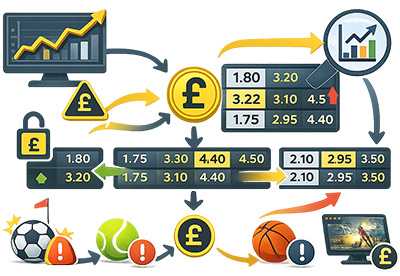
Odds changes carry information. Each price maps to implied probability. Shorter odds mean the market rates a higher chance. Longer odds mean the opposite. Live lines react to events, pace, plus clock pressure. Some markets update faster, since risk spikes around scoring, penalties, or late phases. Wider overround margins reduce fair value, since the book builds extra cost into each side. Focus on one aim, decide whether odds movement leaves a generous price versus your view of true probability. Compare across operators as a routine, yet avoid chasing tiny gains when delays raise execution risk.
| Trigger | Sport example | Common reaction | Price direction | Suspension risk |
|---|---|---|---|---|
| Goal scored | Football | Markets pause, reopen | Favourite shortens | High |
| Red card | Football | Handicap resets | Opposition shortens | High |
| Break point | Tennis | Game winner repriced | Server drifts | Medium |
| Foul trouble | Basketball | Player props adjust | Team drifts | Low |
| Timeout | Basketball | Totals refresh | Often none | Low |
| Injury stop | Any | Lines freeze | Uncertain | High |
| VAR review | Football | Key markets locked | Often none | High |
| Map swing | Esports | Series odds reset | Leader shortens | Medium |
Reading Live Odds and Lines
Shortening signals stronger expectation. Drifting signals weaker expectation. Totals plus handicaps act as updated forecasts, shaped by tempo, efficiency, plus remaining time. Use line shopping with discipline. Check two apps fast, then commit, since constant switching risks missed windows. Watch timer icons, lock symbols, plus price changed prompts. Confirmation delay matters, since a good read turns into poor value once odds update.
- Score panel, verify state, avoid betting during stale feed.
- Clock display, confirm phase, late entries raise rejection odds.
- Lock icon, spot pauses, taps during lock waste time.
- Price changed alert, accept only after reassessing line.
- Market label, confirm type, avoid wrong team or set.
- Selection highlight, recheck pick, prevent slip mismatch.
- Stake field, confirm units, stop fat-finger errors.
- Return figure, review payout, catch wrong odds before confirm.
Spotting Value Opportunities with Data
Start with game state. Add one timely metric. Act only when both align. In football, use shot quality plus territory to update scoring chance. In tennis, track break-point pressure plus second-serve points. In basketball, pace spikes plus foul trouble shift win chance fast. In esports, economy swings plus objective control change round expectation. Avoid stale numbers from delayed feeds, since late stats mislead. Choose no action when signals conflict, or when screens show rapid updates and frequent locks. Patience protects stake plan, plus reduces rushed mistakes.
Research Plan Before Live Betting
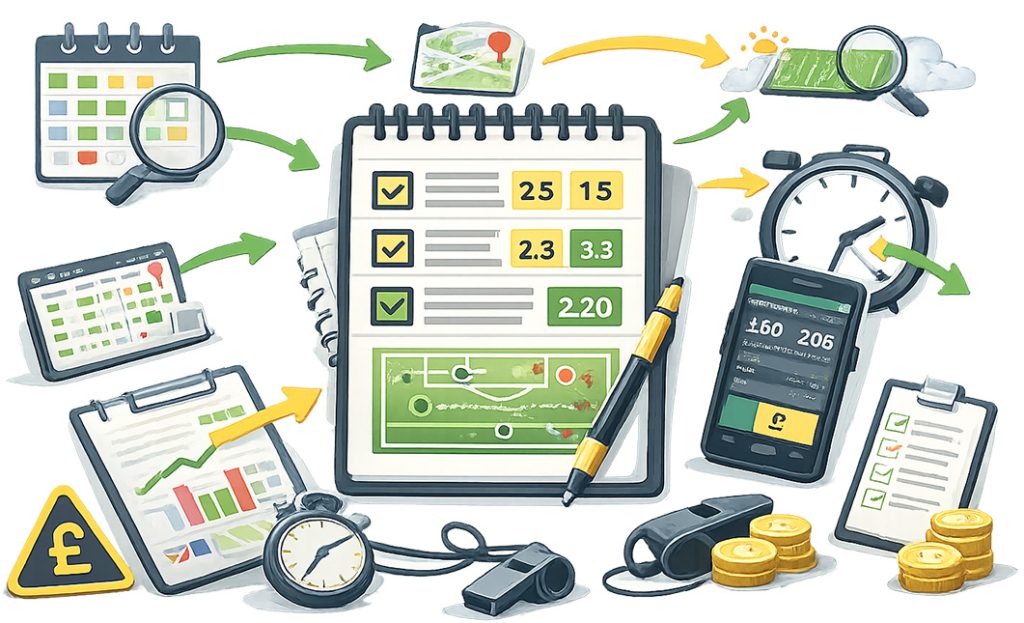
Preparation drives most profit in-running. Before action starts, shortlist fixtures, map likely scripts, then match markets to each script. Add one notebook line per fixture, covering tempo, fatigue, travel, plus referee style. Limit choices to two markets per match, with clear entry triggers. Mid-plan, write live betting system once, then keep rules fixed. This routine saves time, reduces taps, blocks panic stakes, and supports calm decisions. Build watch list, enter each match with primary idea plus backup angle. Set daily loss cap, close app after two rushed errors. Start smaller on first entry, then raise size if flow matches script.
- Fixture shortlist, limits screen hopping, keeps focus on best spots.
- Script note, anchors judgement during swings, stops chase entries.
- Market fit, links idea to price, avoids random picks.
- Entry trigger, defines moment, protects from noise.
- Stop rule, ends session after error, preserves bankroll.
- Unit size, keeps stake steady, limits damage.
- Delay awareness, avoids late odds, reduces rejection risk.
- Exit plan, guides cash out choice, prevents tilt.
- Log sheet, tracks results, improves future selection.
Research Match Context Before Live
Setting shifts win chance ahead of kick-off. Track tactical matchups, form run, rest gap, travel load, plus motivation. Translate factors into pace, chance quality, late danger, plus volatility. Write one sentence script as anchor, for example home presses early, away sits deep, danger rises after 70 minutes. During swings, compare current flow to your script, change course only when evidence breaks it. Mark rotation risk on congested weeks, since fatigue lowers press, pushes second-half variance, and widens totals. Keep choices tied to game state analysis, ignore crowd noise and single highlights.
| Context factor | In-play change | Markets affected | Example application |
|---|---|---|---|
| Tactical shape | Alters tempo | Totals | Pressing side lifts shot count |
| Rest gap | Shifts stamina | Second half lines | Tired legs lift late scoring |
| Travel strain | Reduces intensity | Team goals | Away output dips early |
| Motivation edge | Changes urgency | Next goal | Must-win side pushes faster |
| Surface speed | Affects rallies | Tennis games | Quick court shortens points |
| Referee profile | Raises foul rate | Cards | Strict official lifts bookings |
Using Team News for Betting
Line-up updates move prices fast. Track starting elevens, formation tweaks, minute limits, scratches, role shifts. News hits, markets reprice, locks appear often. Wait for stabilised odds, then recheck during opening phase. Avoid forced entries straight post major change. Follow verified club accounts, league injury bulletins, plus trusted beat reporters. Ignore rumour threads. Use player props if role shift changes volume or minutes. When update lands mid-match, pause, watch restart, then decide. Prices swing in confusion, patience protects stake sizing, shields you from rushed taps.
- Starting XI, official account post, confirms roles, anchors baseline expectations.
- Shape change, match centre graphic, signals high line or low block.
- Minutes cap, presser recap, limits workload, affects closing output.
- Last-minute scratch, lineup card, removes finisher, shifts goal share.
- Duty swap, set-piece tracker, moves taker, alters assist chance.
- Bench depth, squad page, shows comeback threat, shapes closing prices.
- Return note, league bulletin, widens rotation, impacts workload balance.
Timing Bets
Timing pays when the market trails play. Treat match momentum as evidence. Track sequences on screen, then decide. Use stable windows after stoppages, changeovers, timeouts, plus reviews, when feeds sync and prices reopen. Avoid taps during breakaways, set points, fast breaks, plus late scrambles. Locks appear, confirmation drags, and fills fail. Before any stake, check score, clock, plus phase. Wait for restart, then act. If a line looks tempting inside chaos, step back. Keep one entry plan, one exit mark, then move on. Missed spots cost less than errors today. Aim for clean execution, not fast fingers. When prices jump twice within a minute, pause and watch one phase. Only then place stake. This habit keeps sessions calm and profitable.
Match Momentum
Use a four-step routine. Trigger, confirm, price-check, execute. Pick triggers you verify across sports. Look for sustained pressure, serve control, a pace lift, or repeated high-quality chances. Confirm with one stat line or one clear visual cue. Scan for market suspension before you tap, since a locked market turns a good read into a wasted click. Balance trade-offs. Waiting worsens price, rushing brings rejection or stale odds. Decide before kick-off which matters more, safer fills or sharper numbers, then follow one rule for the whole match. Set a quick rule for switching apps, compare once, then commit, since constant hopping kills timing and drains focus during close games.
- Live score strip, confirm state, stops late entries.
- Clock panel, verify phase, avoids end-of-play traps.
- Lock icon, shows freezes, prevents wasted taps.
- Shot quality feed, filters noise, supports pressure read.
- Serve points tab, tracks control, backs tennis trigger.
- Team foul row, flags bonus risk, guides basketball timing.
- Timeout marker, signals reset, offers safer entry window.
- Slip recap, checks selection, blocks wrong market.
Avoiding Emotional Bets and Risk
Live play punishes emotion. Chasing after a conceded score, doubling after a near miss, or following commentary leads to bad entries. Set guardrails before kick-off. Cap bets per match, apply a cooldown after losses, and block entries for five minutes after a goal, break, or red card. Use responsible gambling tools on UK apps, including deposit limits and time-out controls, to keep sessions short. When focus slips, switch to observation-only until judgement returns. If anger rises, close the slip, watch two minutes, then revisit your plan. Mute commentary, hide chat, and trust your notes, since noise pushes rushed clicks in-app too often.
- Max bets cap, limits volume, cuts impulse runs.
- Cooldown timer, slows pace, resets attention.
- No-bet window, avoids repriced traps after shocks.
- Unit stake rule, keeps sizing steady across swings.
- Deposit limit, blocks reload, protects funds.
- Time-out toggle, ends session, breaks chase loop.
- Session log, records entries, improves review.
In Play Markets Explained
Live menus split into families. Goals and points settle cleanly, with clear finish markers. Totals reflect pace plus efficiency. Handicaps track margin swings. Props follow one athlete, so you need minutes awareness. Derivatives cover corners, cards, sets, plus team fouls. Pick type with care, variance shifts, locks rise, updates speed up. New readers do best with simple settlement and clear price cues. Skip complex combos until tracking feels natural. Use in-play bet once, then pause, review screen, confirm phase. Turn odds into chance, compare versus your number, then act with fixed unit size. If clicks meet repeated locks, move towards slower lines, where quote holds longer. Football fits totals, corners, bookings, since flow stays visible. Basketball props shift on fouls, rotations, timeouts. Tennis numbers react to serve holds and break pressure. Esports series prices change on economy, map control, tilt. Begin each match with one focus, avoid hunting every tick.
| Market type | Pricing driver | Volatility level | Suspension likelihood | Best use-case |
|---|---|---|---|---|
| Winner | Clock | Steady | Occasional | Gameplan |
| Totals | Rhythm | Choppy | Rare | Tempoedge |
| Spread | Gap | Wavy | Regular | Mismatch |
| Nextscore | Siege | Spiky | Intense | Pressure |
| Corners | Width | Jumpy | Seldom | Crosses |
| Bookings | Whistle | Edgy | Intermittent | Derby |
| Shots | Usage | Wild | Patchy | Rolechange |
Choosing Live Markets for Value
Start from your script, pick a line you monitor without distraction. Slow matches suit totals, pace stays readable, price steps arrive cleanly. Clear quality gaps fit handicaps, margin guides updates. Player props suit focused viewing, since role signals volume. Avoid niches without live data, visibility drives judgement. Keep correlation low, stacked picks magnify error. Skip thin books, one burst flips numbers fast. Shop across two apps once, then commit, window length stays short. Enhanced odds banners tempt, yet edge matters, compare chance versus your estimate, then pass if value fades. Treat best live bets as those you price from action on screen. If timing goes, accept it, do not chase another angle. Check rules, stake once, move on today quickly. Use one market per match, switch only after clear evidence change. If slip shows reprice prompt, cancel when edge fades, keep execution safe each time.
Understanding Cash Out Terms and Risk
Early exit quotes look helpful on UK apps, yet pricing includes operator edge. Quoted returns often sit below fair value, since the book buys back your slip at discount during stress points. When locks hit, offers disappear, so timing matters most. Partial option leaves some stake live. Auto mode, where offered, triggers at chosen return. Use cash out feature only for risk control, not habit. In some positions, a hedge on another line gives cleaner cost.
Quick review
Run each point in order before tapping accept. Skip offer when numbers feel stale or rushed today.
- Score plus clock, confirm phase before any exit.
- Offer figure, compare versus original stake.
- Requote prompt, reject worse number after delay.
- Lock symbol, pause until reopen, then act.
- Partial toggle, keep exposure small when edge stays.
- Rules tab, read void triggers before accepting.
- Hedge line, weigh exposure, then decide.
Price Delays Create Hidden Risk
Confirmation delay puts your tap in a queue. You place bet at one quote, feed updates, number shifts. App requests approval at revised price, else slip fails. Delays rise in fast sports, plus dangerous attacks, as traders guard late clicks. Football counters, tennis break chances, basketball fast breaks, esports clutch rounds often trigger longer queues. Use safer windows, restarts, changeovers, dead balls. Avoid last-second taps on shots, match points, buzzer plays. Set personal limit for acceptable reprice. Accept new quote only if it stays close to your plan. On prompt, cancel unless edge survives at once. Watch lock icon, wait for reopen, then retry once. Keep unit size fixed so bad fill hurts less today.
Football In Play Strategy
Football dominates UK live screens. It also punishes late clicks, since locks hit on big moments and prices reset fast. Your edge comes from reading chance quality, not raw possession. Track tempo shifts, entry into the box, plus set-piece volume. Watch incentives late, a draw suits some sides, others chase. Link signals to markets. Use goals lines when chances repeat. Use BTTS when both teams create clean looks. Use corners when wide pressure stays constant. Use cards when control slips and tackles rise. Use late goal angles when chasing increases risk and shape breaks. Keep process tight. Confirm state, pick one market, stake one unit, then review after the next stable phase.
Football In Play Odds for Goals
Goal chance moves with scoreline, minutes left, shape, plus subs. A leading side drops depth, invites pressure, yet also opens counter space. A trailing side pushes full-backs, raising shot volume and transition risk. Avoid reacting to one big chance. Use a short window, watch two or three attacks, then decide. Check shot quality, entry zones, plus set-piece count. Time entries after restarts, throw-ins, goal kicks, or VAR clearance, when play settles. In added minutes, fatigue plus direct play lift chaos and swing prices. Treat injury time value only when pressure remains sustained and subs increase attacking threat. Keep expected value (EV) in mind, pass when price implies more than your read supports.
| Signal | What to check | Market fit | Common mistake |
|---|---|---|---|
| Box entries | Attacks into area | Over goals | Chasing after one break |
| Big chance count | Clear shot quality | Next goal | Ignoring weak finishing |
| Press success | Turnovers high | Team goals | Overrating safe possession |
| Sub change | Attacker on | BTTS | Missing role shift |
| Set-piece run | Corners plus free kicks | Over 0.5 goals | Forgetting referee tempo |
| Game state | Lead protection | Under goals | Ignoring counter threat |
| Added minutes | Time shown plus flow | Late goal | Betting without pressure |
Cards Corners and Match Data
Derivatives often read cleaner than goals. Corners build from wide attacks, blocked crosses, plus repeat pressure. Cards rise when a side loses shape, chases, or faces pace in behind. Referee style matters, some officials book early, others manage with warnings. Data keeps you grounded. Track corner count markets, then link to entries into wide zones and sustained deliveries. Track cards with foul count, duels lost, plus tactical fouls stopping breaks. Watch for tactical shifts, a switch to five at the back, a red card, or fresh wingers, since trends reset fast. Stick to cues you see, then act in stable phases, not during stoppage confusion.
- Wide touch map, match centre, shows flank focus, supports corners.
- Blocked cross tally, live stats, signals corner build-up.
- Corner pace, score widget, tracks rate, guides totals.
- Throw-in pressure, event feed, flags sustained siege.
- Foul count, stats tab, indicates card risk growth.
- Referee profile, match preview, sets booking baseline.
- Counter breaks, live clips, raises tactical foul chance.
- Player props view, markets panel, checks card-prone roles.
Tennis and Basketball Live Strategy
Tennis and basketball bring frequent scoring checkpoints, so live prices move in clear steps. Speed matters. A stream lag or slow feed turns a smart view into a late tap. Tennis hinges on serve strength, return pressure, plus key points at deuce. Basketball hinges on pace, rotation shifts, plus foul trouble. Pick markets you track without guessing. Follow one screen, one stat panel, one bet slip. Write two angles before start, then wait for a stable phase. For an in play tennis betting strategy, focus on serve holds, break looks, and changeovers as entry windows. For hoops, reassess at timeouts and between quarters, where prices pause and you see who sits. Skip markets you cannot monitor, since missed context ruins execution. Track second serve targets, plus early breaks, for tennis. Track turnover runs, plus bonus situations, for basketball. Keep stake size fixed across both sports.
Tennis In Play Data Signals
A solid tennis betting strategy starts with serve quality and physical signs. Watch first-serve rate, second-serve attack, plus break-point pressure. Short rallies favour big servers. Long exchanges expose legs and timing. Link each signal to next game, set winner, or total games. Avoid rapid trading. Wait one changeover, confirm trend, then act. After medical timeouts or disputed calls, prices jump and focus drifts, so step back until play settles. Check new-ball games, since pace changes. Note double faults under stress. Use one stat plus one visual cue before clicking. When signal conflicts, mark no bet and wait for next service game. This keeps discipline under swingy pricing. Track body language too.
- First-serve %, stats panel, tracks free points.
- Second-serve points, match feed, shows attack risk.
- Return depth, on-court view, signals pressure building.
- Break points created, scoreboard, reveals leverage games.
- Rally length, stream view, flags fatigue swings.
- Unforced errors, live tracker, shows timing loss.
- Movement speed, camera, spots decline early.
- Changeover notes, broadcast, gives reset window.
Basketball Live Pace and Odds
A strong basketball betting strategy starts with pace plus rotation. Fast possessions lift totals. Slow half-court sets pull lines down. Shot profile matters, rim attacks and open threes raise scoring chance. Turnovers create run-outs and quick points. Foul trouble shifts matchups and forces bench minutes. Late games add free throws, so totals swing even with poor shooting. Small runs happen often, so avoid chasing. Reassess at timeouts and quarter breaks, then place stake when teams reset. Track bonus early, since free throws start sooner. Note coach patterns on defensive switches. During live transitions, taps arrive late, so wait for dead ball. Keep one unit size across quarters. Stay patient.
| Signal | What it shows | Line impact | Best timing |
|---|---|---|---|
| Pace | Possessions | Total up | Timeouts |
| Shot mix | Rim looks | Total up | After stoppage |
| Cold threes | Empty trips | Total down | Quarter end |
| Turnovers | Run-outs | Spread swing | After review |
| Foul trouble | Bench units | Spread shift | Free throws |
| Rebounds | Extra shots | Total up | Half time |
| Rotation | Star rests | Spread move | Breaks |
Esports Live Betting Strategy
Esports matches swing fast. Patches shift balance and old reads fail. Streams lag behind the server feed, so late taps hurt. Use live sports betting only when you verify map, round, side swap, and economy on screen. Avoid staking during tech pauses, remake votes, or long admin checks. Pick one market with clear settlement, then ignore extra options. Pricing moves on small events, so stake smaller and accept fewer entries. Prep saves time. Build a shortlist, write one main angle, add one backup, then wait for confirmable phases. Treat sudden odds jumps as warning, wait for next round start before committing.
Esports Live Research And Meta
Meta means what wins right now. It includes agent choices, team comps, map pool comfort, and pace of fights. A patch shifts damage, economy, or objectives, so yesterday’s edge vanishes. Before you bet on sports, write a short card for each team. Note preferred maps, recent bans, plus side strength. Check roster swaps and role changes, then watch warm-up trends once picks show. When a patch drops, reset notes, then wait for first series data before staking. Only use verifiable sources, event broadcast overlays, plus official team posts. Keep one notebook line per map, update after each break.
- Patch notes page, confirms balance shifts, guides market avoidance.
- Map veto screen, shows comfort edge, shapes series angle.
- Draft overlay, reveals composition, signals win condition.
- Roster update post, flags swaps, changes synergy.
- Recent match log, shows form, spots tilt patterns.
- Side win rates panel, highlights bias, affects half lines.
- Schedule card, shows fatigue risk, hints at slow starts.
Bet Smarter with Stream Data
Streams arrive late. Treat every reaction as old news. During live betting, ignore chat spikes and caster hype, since noise follows emotion, not state. Rely on the in-game overlay, score, round timer, plus economy panel where shown. Pause after a swing, confirm buy phase, then decide. If video stutters or drops quality, stop staking until clarity returns. Keep integrity in mind, yet avoid rumours mid-map. When the book locks markets, wait for reopen, then reassess price versus your plan. Keep one screen on match centre for official ticks, one on video for positioning. Place entries during breaks between rounds, timeouts, or halftime. Set a personal rule, accept one reprice only, else cancel. Record each wager, then review after map end before next series each time.
Watch the overlay, not the crowd, then act after state confirmation.
Will Jarman, Esports Trader at Pinnacle Sports
Bankroll and Flat Stake Strategy
Split money into two pots. Use one pot for day to day life. Set another fund for live sessions only. This session fund sets your risk ceiling and blocks impulse top ups. Choose a unit size before kick-off. Stake one unit per entry across every sport. Flat staking cuts stress and keeps choices clear when prices jump. Record results after each session, then review weekly. Adjust unit size only after a tracked sample across many sessions, never after one match. Build a staking plan with fixed limits, plus a hard stop for the day. Set deposit limits and time-out settings inside your account. Aim for eight to twelve entries per session. Stop after two clicks. Treat each unit as a ticket, not a test of courage.
| Bankroll size | Unit | Max bets | Stop rule | Focus |
|---|---|---|---|---|
| £50 | £1 | 10 | -£8 | Learn markets |
| £100 | £2 | 12 | -£15 | Clean entries |
| £250 | £5 | 15 | -£35 | Fewer clicks |
| £500 | £10 | 18 | -£60 | Stay selective |
| £1,000 | £20 | 20 | -£120 | Stick to plan |
Bankroll Planning for Live Sessions
Plan each session like a shift. Set a start time, an end time, and a maximum number of entries. Cap exposure per match, so one game never wipes the night. Use a stop-loss and a stop-win, then log off when either hits. Fewer, higher-quality entries beat constant action, since each click carries delay and error risk. Track every stake after the session, then review in one batch, so rules stay stable during play. Use responsible gambling tools on UK apps, such as deposit limits and time-out controls, to lock limits. Set one target for quality, then ignore extra markets, even when the screen flashes.
- Session length, keeps focus, avoids late fatigue today.
- Entry cap, stops spray attempts, improves selection.
- Per-match limit, reduces concentration risk.
- Daily loss stop, protects funds during bad flow.
- Daily win stop, locks gains, prevents give-back.
- Two-screen rule, reduces slip errors.
- Post-session log, supports review, spots leaks.
- Next-day reset, blocks tilt carryover.
Flat Betting for Stake Control
Flat staking keeps your head clear. Each entry uses the same unit, so confidence swings never change risk. This blocks chasing after a bad beat and stops overconfidence after a lucky goal. Avoid progressions and doubling systems in live markets, since fast reprices turn small errors into big losses. Make small adjustments only between sessions, after a large log sample, and only by one step. If you see overround margins widen on niche lines, reduce volume or step away, since value drops. Stick to one unit, one slip, one review cycle, and treat discipline as the edge. Write unit by the keyboard. Enter stake, pause, read the slip, then confirm. If a reprice prompt appears, cancel unless edge still holds.
Cash Out Hedging and Risk Control
Exits belong in plan, not emotion. Set triggers before kick-off, follow rules. Route one uses cash out feature inside slip. Second path relies on hedge elsewhere once matching line appears. Both protect session fund, reduce variance, block greed after favourable swing. Treat every quote as price carrying margin. Compare number against updated match view, time left, volatility. Take exit after new information breaks pre-match edge. Hold position while flow matches script and remaining risk looks manageable. Use hedge if opposing market provides cleaner offset price. Avoid grabbing profit after one swing, wait for stable phase, then act. Keep unit fixed. Record decision reason, review next day, adjust triggers only after long sample. Keep slips simple. Avoid partial exits during locks, since offer vanishes. When hedge line moves, skip chase. After review, raise unit one step only, once results show stable edge.
Cash Out Decisions And Hedging
Treat each exit as new decision. Update win chance, compare versus offer. Quote carries margin. Weigh time left, plus risk from injury, red card, or pace shift. Take cash out when edge has gone and chaos sits ahead. Hold when move looks small and clock stays early. Use betting exchange when another line offers offset at lower cost. Keep method simple. Decide once per key event, maintain unit size, record reason, review later. During sudden substitution, reassess roles before acting. After tempo change, wait for next restart, then check offer again. Avoid greed after favourable drift. Skip exits when offer appears during lock gaps. If offset market lacks depth, ignore hedge and accept risk instead today.
| Scenario | Change | Move | Reason |
|---|---|---|---|
| Injury | Star off | Cash out | Edge flips |
| Red card | Shape breaks | Cash out | Volatility spikes |
| Slow start | Low shots | Hold | Time remains |
| Early goal | Small swing | Hold | Offer thin |
| Late siege | Shots pile | Hedge | Protect gain |
| Tempo flips | Press fades | Hedge | Reduce swings |
| Market lock | No offer | Hold | Wait reopen |
Live Tools for Smarter Data Bets
In-play sports betting rewards speed and clarity, not extra tabs. Set up three screens, then stop browsing. Put the match state on one view, numbers on another, the bet slip on the third. Read each panel in two seconds. If one feed lags, drop it for the session. Stick to one stats source, one odds view, one slip. This routine cuts late taps and wrong markets. Refresh only during breaks, not during live action. Keep your eyes on state first, then price, then stake. Treat every switch as a risk, since the market keeps moving while you hunt menus.
- Score view, pin the match page, keep clock and score visible.
- Stats panel, choose three metrics, hide the rest.
- Odds screen, lock the same market filter before play starts.
- Bookmaker slip, keep stake box ready, clear old selections.
- Audio control, mute chat and clips, keep official whistles only.
- Sync check, compare clocks, stop entries if they differ.
- Notes file, log time, market, stake, reason after each bet.
Streaming Data Tools for Live Betting
Video feels vivid, yet it often arrives late. Treat it as context, not timing. Use a fast tracker for score, clock, and key events, then use video for shape and effort. For in game betting, confirm state on the tracker before any tap. When the picture freezes, audio drifts, or the clock disagrees with your tracker, stop placing bets. Wait for the next dead ball, changeover, timeout, or break, then recheck. Avoid betting off crowd noise, chat spam, or caster excitement. Those signals trail action and push bad clicks. Keep one stream window. Extra feeds split focus and increase slip errors. If the tracker updates first, trust it and act only after a calm phase begins.
Integrity Delays and Responsible Betting
In running betting adds a layer beyond form and tactics. Picture delay means you watch the past while prices reflect the present. Some players use faster feeds and automated triggers, so odds move before your eyes catch up. Books add pauses and confirmation steps to protect pricing, yet those same delays reshape your results. Treat any lag as a cost. Work from current state only. When the screen feels out of sync, skip the moment and wait for a reset phase. Build limits before kick-off. Plan breaks like timeouts. Use them without guilt. A short pause protects judgement, stops chase behaviour, and keeps the session within budget. If you feel pulled into constant tapping, step back and watch only until control returns.
Delays Bots and Responsible Betting
Automated activity thrives on speed. Faster feeds spot events first, prices shift, late clicks lose value. Discipline closes part of the gap. Bet only when state matches across tracker and video. Cut stake size when lag appears. Avoid fringe markets with thin pricing, since one update swings odds hard. Keep sessions bounded with built-in controls. Use GamStop self-exclusion if play stops feeling optional. Take short breaks after big moments, then return with a clean head. Leave the slip empty during chaos.
- Deposit cap, open limits, choose figure, confirm with passcode.
- Loss ceiling, set daily threshold, stop after hit, log off.
- Time reminder, enable session timer, end on alarm, close app.
- Timeout switch, activate cool-off, block access, return later.
- Reality check, turn on prompts, review spend, decide next step.
- Tracker first, follow official feed, wait restart, then act.
- Lag rule, spot desync, reduce unit, avoid quick-fire markets.
- GamStop self-exclusion, register once, cover all licensed operators.
In Play Betting Tips for UK Punters
These in play betting tips turn live markets into a routine. Each step has one action, one reason, one mistake to avoid. Work from confirmed match state. Choose one market you track well. Keep stake size fixed. Exit with rules, not emotion. Use breaks to reset. Stop after errors, not after losses.
Tip One Compare Live Odds Regularly
Use live odds comparison at set moments, not every minute. Check one alternate operator at kick-off, half-time, and after a key swing such as a red card or injury. Do it fast, then return to the slip. Comparison helps only when you still get filled. When markets lock and reopen, prioritise clean execution over tiny edges. A common mistake is chasing the top price across apps, then landing a stale number, or missing the window and forcing a worse entry.
Tip Two Use Research Before You Bet
Write a short script before the match, then trade off evidence. Inplay betting strategies start with a shortlist, one main angle, one backup, and a clear stop rule. Example. You back a slow first half. A goal on five minutes tempts a panic over. Your script tells you to wait for ten minutes of tempo proof before switching. The common mistake is reacting to one moment and abandoning preparation.
Tip Three Keep Flat Bankroll Stakes
Flat units improve bankroll management because your risk stays stable while odds swing. Pick one unit and stick with it across every entry. Example. A match turns chaotic after a red card. You lose two bets. Flat staking keeps the next wager at one unit, so the session stays alive. The common mistake is raising size to win back losses during volatile phases, which turns a small drawdown into a blown session.
Tip Four Plan Cash Out Exits
Decide exits before entry. Set hold rules, cash out rules, and hedge rules, then follow them. The cash out feature is a priced offer, so treat it like any other quote. Check time left and volatility before accepting. Cash out helps after a major shift, injury, red card, or tempo flip. A common mistake is taking early profit on a small move with plenty of match time left, then re-entering at a worse price.
Tip Five Limit Risk During Matches
Set a cap per match and keep it. Avoid entries during unstable phases, VAR checks, break points, or fast breaks. Take a short break after a losing run, then return with a clear head. Use responsible gambling tools on UK apps to set deposit caps, loss limits, and time-outs. The common mistake is chasing action when the feed lags or markets lock repeatedly, which leads to rushed taps and poor fills.

Try Available Non GamStop Bookmakers
Click the bookmaker name or logo to open the linked review. The review explains the site and shows what to verify.
Sources of information for this article
- UK Gambling Commission, Self-exclusion
- GAMSTOP, Control your gambling
- Wikipedia, Sports betting
- Wikipedia, Betting exchange
- Reddit, r/sportsbook thread on live betting delay
In Play Betting FAQs For Punters
When do live in-play betting tips favour cashing out?
In-play betting tips point to cash out after a major information shock, such as an injury or red card. Check the new match shape first. Avoid acting during a lock.
Which live betting markets suit live in-play betting tips for beginners?
In-play betting tips favour simple totals or match winner lines with clear settlement. Avoid complex builders early. Keep one market per match.
How do live in-play betting tips handle delays?
In-play betting tips say confirm score and clock on a fast tracker before any tap. Skip entries when feeds disagree. Wait for a restart phase.
Do live in-play betting tips support odds shopping every minute?
In-play betting tips support quick checks at set moments only. Too many switches cause missed windows. Prioritise safe fills when locks repeat.
How do live in-play betting tips manage stake size?
In-play betting tips use one unit size across a session. Adjust only between sessions after tracked results. Avoid raising size after losses.
Which responsible gambling tools fit live in-play betting tips?
In-play betting tips align with deposit limits, time reminders, and time-outs. Set them before kick-off. Treat them as part of the plan.
When do live in-play betting tips say hedge instead of cash out?
In-play betting tips favour a hedge when another market offers a cleaner offset and you understand the new risk. Keep it simple. Avoid thin markets.
How do live in-play betting tips stop chasing?
In-play betting tips set a per-match cap and a cooldown after losses. Step into observation-only when judgement slips. Return after a calm phase.